
Tools · Framework
Orientation Compass™
Which way are you facing — and how tightly are you identified with the way you see?
You do not see the whole world at once. None of us do.
We naturally orient toward certain aspects of reality while paying less attention to others. That orientation shapes what we notice, what we value, how we approach problems and what we tend to overlook.
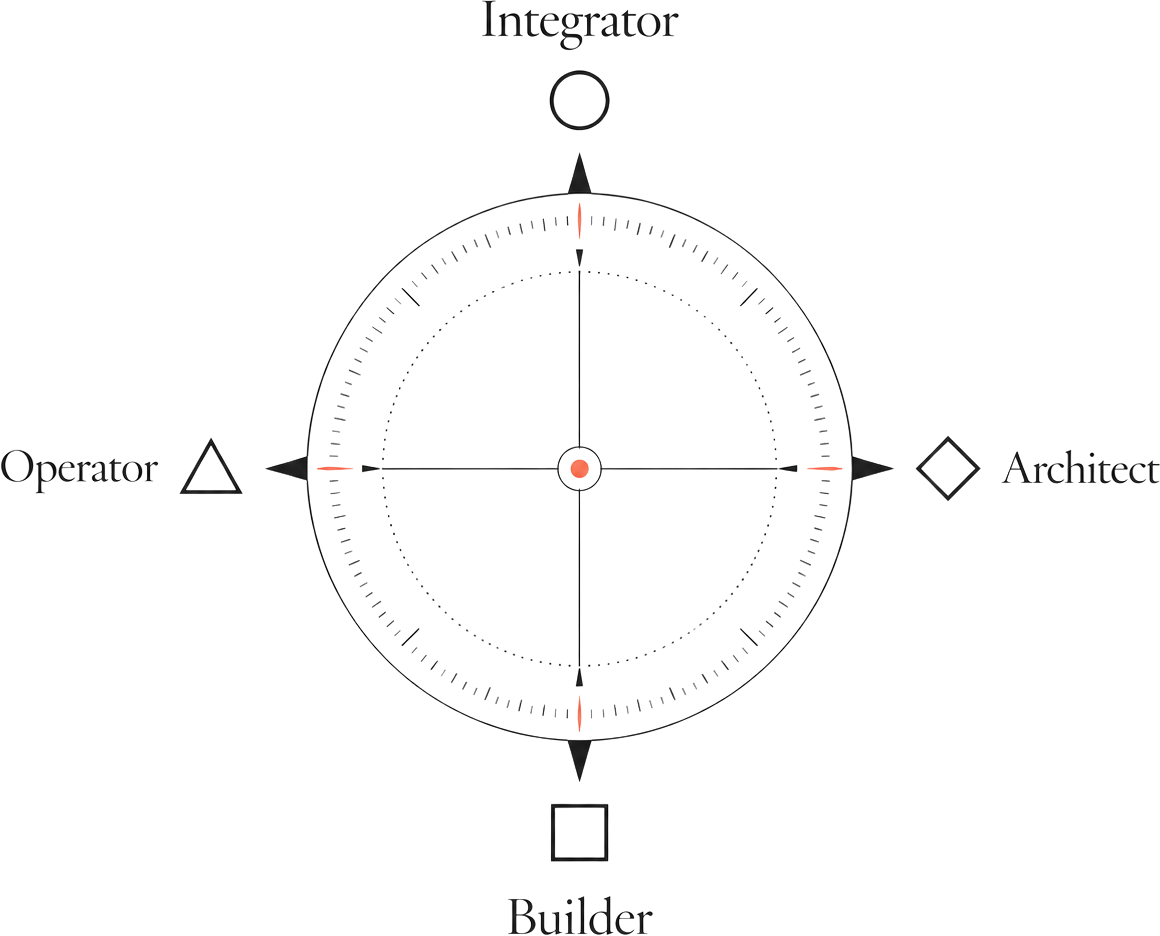
The Compass reads two dimensions at once: the direction attention travels, and how freely a person can relate to their own way of seeing.
Dimension one
Horizontal orientation
Which way are you facing?
An orientation is a preference in attention, not a fixed identity.
Dimension two
Vertical level
How tightly are you identified with the way you see?
I · D · O · U
Not a ranking of people. The same person moves between levels depending on context, pressure and what is at stake.
What to do with an orientation.
Naming an orientation is only the first move. The useful work is noticing what sits outside your usual field of view — and what happens to your seeing under pressure.
That work is easier in conversation. CORE™ is the method used to stay with whatever the Compass reveals.